Learn
A short history of taekwondo
How a group of post-war Korean martial-art schools became one of the world’s most widely practiced martial arts and an Olympic and Paralympic sport, and where the forms on this site come from.
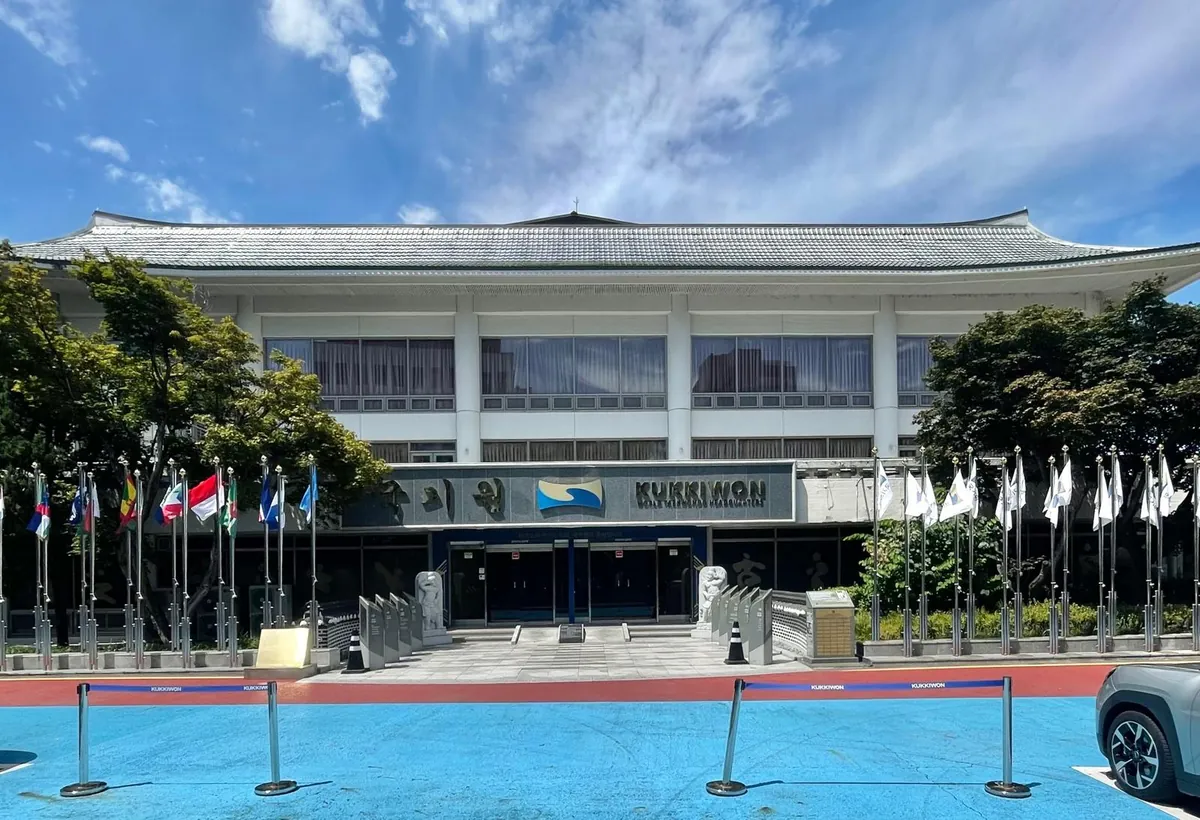

How modern taekwondo took shape
Roots. Kukkiwon’s history connects taekwondo with older Korean empty-hand arts such as Subak and the folk art Taekkyeon, and notes that judo, kendo and other foreign styles reached Korea under Japanese rule.
The kwans, 1946–1960. After liberation, those imported arts were taught in new schools, the Five Kwans. By Kukkiwon’s account, they added kicks drawn from Taekkyeon, and after the Korean War the name “Taekwondo” took hold as the schools moved toward unity.
One association, 1961–1970. In the early 1960s a national association brought the schools together under shared dan tests and poomsae. Sparring entered Korea’s National Sports Festival in 1963, and the art spread abroad, to Asia, Europe and the United States.
Two kinds of organization. Taekwondo today is shaped by bodies with different jobs. Kukkiwon, founded in 1972 and known as the World Taekwondo Headquarters, leads taekwondo as a martial art and cultural tradition, including the poomsae taught in WT/Kukkiwon schools. World Taekwondo, founded in 1973, governs it as an international sport, including Olympic competition. Alongside them, the International Taekwon-Do Federation (ITF), founded in 1966, teaches its own patterns and runs its own competitions.
Source: Kukkiwon, History of Taekwondo; founding dates as cited in the timeline below.
Timeline
-
–
Early modern taekwondo: the post-war kwans. Kukkiwon’s history treats these years, when the Five Kwans emerged, as taekwondo’s early period.
Source: Kukkiwon, History of Taekwondo (Early Taekwondo, 1946–1960)
-
The ITF dates the name “taekwondo” to this day. Kukkiwon’s history places the name after the Korean War, without a date.
Source: ITF, Our history
-
Sparring becomes an official event at Korea’s 44th National Sports Festival.
Source: Kukkiwon, History of Taekwondo
-
The International Taekwon-Do Federation (ITF) is founded. The ITF names General Choi Hong Hi as its founder. The ITF patterns on this site, such as Chon-Ji and Dan-Gun, come from this tradition.
Source: ITF, Our history
-
Kukkiwon is founded. Kukkiwon is the source of the Taegeuk and black-belt poomsae taught in WT/Kukkiwon schools, including the forms in this site’s WT/Kukkiwon lessons.
-
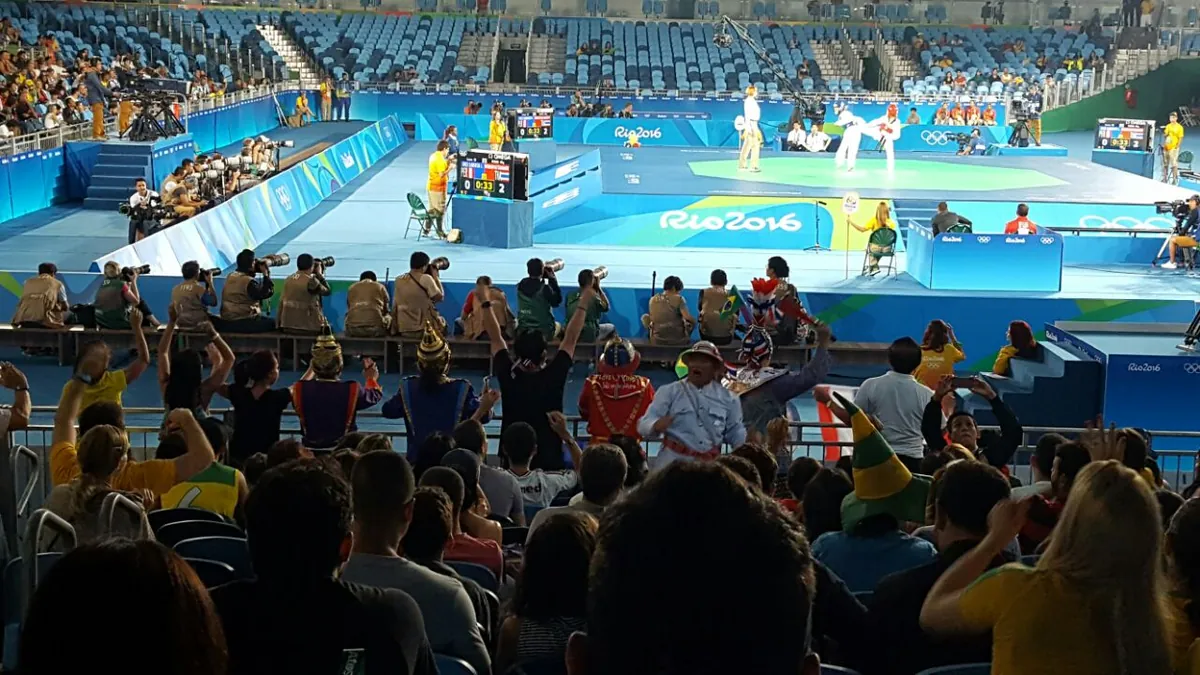
World Taekwondo is founded. World Taekwondo is the international federation for Olympic taekwondo competition.
Source: World Taekwondo, Annual Report October 2021–July 2022
-
The ITF holds its first World Championships, in Montreal.
Source: ITF, Our history
-
and
Taekwondo is a demonstration sport at the Seoul 1988 and Barcelona 1992 Olympic Games. Demonstration events did not award Olympic medals.
Source: IOC Olympic Studies Centre, Taekwondo: history at the Olympic Games
-
The International Olympic Committee decides to add taekwondo to the Olympic program.
Source: IOC Olympic Studies Centre, Taekwondo: history at the Olympic Games
-
Taekwondo is first contested for Olympic medals, at Sydney 2000.
Source: IOC Olympic Studies Centre, Taekwondo: history at the Olympic Games
-
Para taekwondo makes its Paralympic debut, at the Tokyo 2020 Paralympic Games (held in 2021).
Source: International Paralympic Committee; see also Para taekwondo overview

The forms on TKDflow
The lessons here follow three traditions: WT/Kukkiwon poomsae such as the eight Taegeuk forms, Koryo and Keumgang; ITF patterns such as Chon-Ji, Dan-Gun and Do-San; and the ATA’s Songahm forms. Schools within each tradition can still differ in details, so your instructor’s version comes first.
Browse the forms library or start with the beginner’s guide.
Watch
World Taekwondo’s official channel has a short retrospective, Celebrating 30 Years of Olympic Taekwondo (YouTube, about 6 minutes). For forms and sparring videos with what to watch for, see the video gallery.
Sources and photo credits
- IOC Olympic Studies Centre: Taekwondo, history at the Olympic Games (demonstration events, 1994 decision, Sydney 2000).
- Kukkiwon: Introduction of Kukkiwon (founded 30 November 1972; the World Taekwondo Headquarters) and History of Taekwondo (roots, the kwans, the 1960s association and the 1963 festival).
- World Taekwondo Annual Report, October 2021–July 2022 (founded 28 May 1973).
- International Taekwon-Do Federation: Our history (founded 22 March 1966; its 1955 naming account; first World Championships, Montreal 1974).
- International Paralympic Committee: Para taekwondo’s Paralympic debut and Para taekwondo overview.
- Kukkiwon south gate (2026): LucaPagani7, Wikimedia Commons, CC0 1.0.
- Rio 2016 Olympic taekwondo arena: Henriquemarra01, Wikimedia Commons, CC BY-SA 4.0; adapted and shared under the same license.
Sources checked 19 November 2026. TKDflow is an independent learning site and is not affiliated with any of these organizations.